

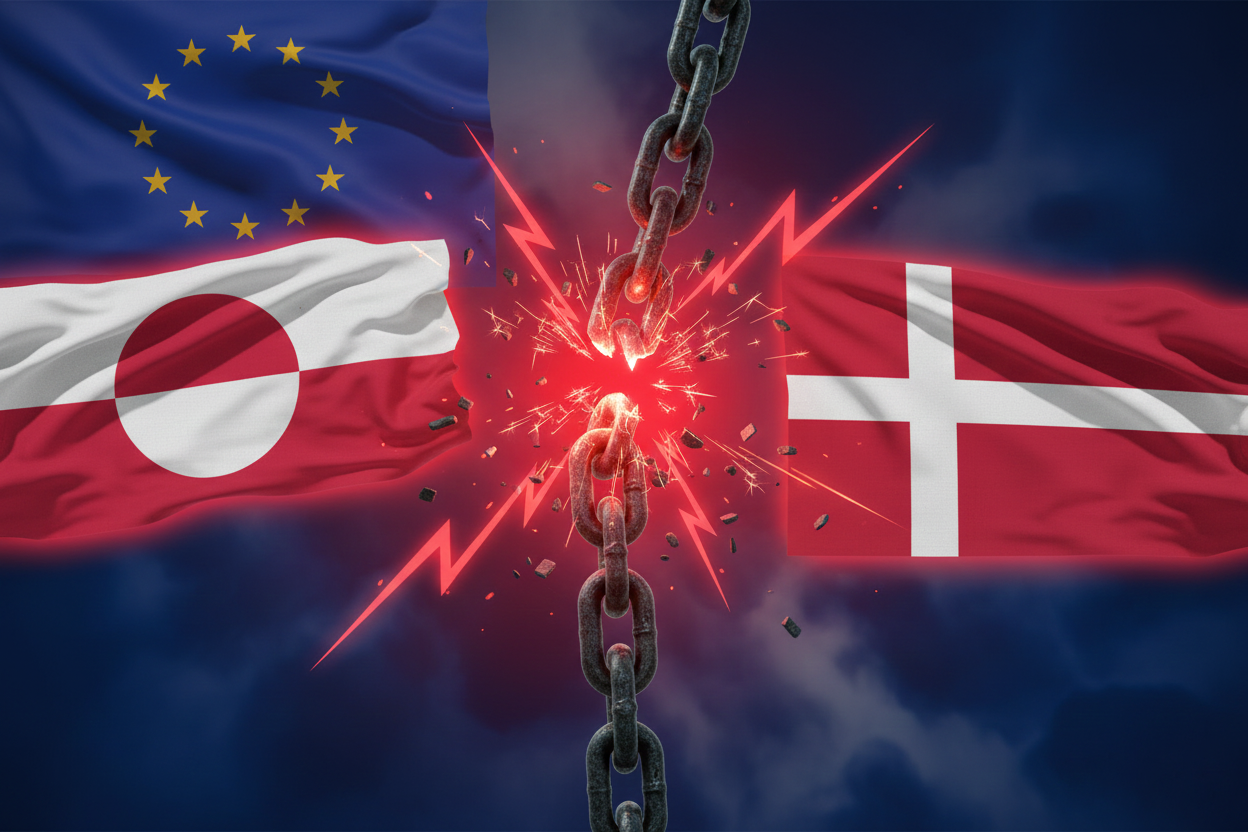
Lawfare and Coercion – Lawsuit Exposes Denmark’s Eugenic Practices from the Coil Case to Psychiatry
Background and Introduction
Legal process consultant Hans-Henrik Juhl from LordBCSR.com (legal advisor to national chairman Niels Jørgen Langkilde, Patientforeningen.dk ) filed a lawsuit on December 23, 2025, against Justice Minister Peter Hummelgaard at the Copenhagen City Court.
The case challenges a peculiar Danish practice (constitutional violation; politically camouflaged as legal custom in U.2008.55 Ø/RPL chap. 43a) in the disability field with roots in 1948, when Denmark was a pioneer in eugenic measures against psychosocially disabled individuals. Authorities and courts systematically disregard GDPR and the principle of legality through the police’s “laundering” of cases – including by switching to incident numbers (cf. the minister’s response to question 423/2025 and 323/2023). The Constitution § 71, para. 6 is ignored: According to Lord B CSR and the AU Student Council’s Legal Aid (lack of case law since 1953), the police’s medical legal basis (practicing physician) for deprivation of liberty is never intensively examined by the courts.
See the Justice Minister’s response to question 338/2025 in the Parliament.
The practice applies to the entire Kingdom of Denmark, including Greenlandic children and adults – with traces from the coil case (1960s-70s), where thousands had coils forcibly inserted without consent as part of eugenic population control.
Key Elements in the Case
• Rising incident cases: Police incident cases increased from approx. 300,000 annually in 2007 to over 500,000 in 2022 – average 392,722 per year (2007-2022). This marked growth is supported by Denmark’s high tax burden and extensive regulations from both the state and the EU, which in certain perspectives can hinder private innovation and job creation in the free sector.
• Public sector growth: The result is an expanding public sector with more Danish-language-challenged employees (illegal GDPR processing activities/serious errors in patient records), where some jobs arise in connection with increased institutionalization and coercive measures, presented as necessary “health care for the disabled’s own good.” In certain cases, the state employs what can be described as emergency lawfare against vulnerable citizens whom combined authorities and courts perceive with lifelong profiling as “unsound mind” (ECHR art. 5-1(e) without the possibility of contradictory second opinion from an impartial medical expert chosen by the deprived citizen.
• International criticism: While Denmark concludes its EU presidency and highlights European values, policies on coercion and institutionalization face repeated criticism from the UN Committee on the Rights of Persons with Disabilities and the Council of Europe for increasing use of coercion, discrimination, and lack of deinstitutionalization. • Courts’ role: Courts can, through legal custom, review the constitutionality of laws (Const. §§ 3 – 27, 61, 64, 71.6). The lawsuit demands recognition of unconstitutionality, removal of barriers, and compensation. Lex specialis is confused with lex superior (collective incompetence or lawfare).
• November 7, 2024: “investigate the processes leading up to the deprivations of liberty“; 17-second excerpt; MP3 video Consultation Meeting in the Parliment with Health Minister Sophie Løhde Full video from the Folketing >> 26:00 min
• Winterwerp v. the Netherlands (1979): The ECHR established three minimum criteria for lawful deprivation of liberty of persons of unsound mind: reliable diagnosis, severity, and persistence of the disorder.
• Development (Rooman premise 194): Since then, the Court (ECHR) has placed increasing emphasis on the quality of treatment – lack of appropriate and individualized therapy can break the connection between the purpose of the deprivation of liberty and its execution, thereby making the entire measure unlawful. This supports the case’s demand for intensive review of the police’s authority and medical certificates from the outset.
IMR’s Role (CRPD art. 33) and Delimitation Despite hundreds of employees at the NGO; Danish Institute for Human Rights (IMR) and the patient group dying 20 years earlier than others, they have consistently limited their investigations to the competence of the Psychiatric Patients’ Complaints Board – from the patient’s admission to the hospital until discharge. They have apparently never focused on unlawful deprivations of liberty carried out by, e.g., the police—despite it being incredible that the Danish police have never made mistakes since 1953, thus deeming control unnecessary—based on biased doctors (cf. Psychiatric Act § 7 para. 2/Administration Act § 3) or lack of clear and unambiguous legal basis. This underscores a gap in human rights monitoring that contributes to the eugenic practice challenged by the case.
Additional Information: The case challenges systematic violations and demands reform. Due to resource constraints, the case is expected to proceed exclusively in writing. Follow the developments on LordBCSR.com or via x.com/LordBCSR.
. Quotes from Hans-Henrik Juhl:
• “Denmark’s eugenic legacy does not stop at the coil case – it continues in today’s psychiatry through lawfare against vulnerable citizens. It is time for accountability and change.”
• “The extensive and increasing institutionalization in Danish psychiatry entails enormous societal costs – billions of tax kroner, burden on close families, and deep personal suffering for the patients themselves. By reducing unnecessary coercion and strengthening prevention and community-based alternatives, we can save billions and restore human dignity.”
Contact: Hans-Henrik Juhl, Legal Process Consultant, LordBCSR.com
E-mail: jur@lordbcsr.com